
A pet parent doesn’t usually get upset because your policy exists. They get upset because they hear about it at the worst possible time.
The late pickup rule comes up when the front desk is already closing. The cancellation policy suddenly matters after your grooming salon has already lost the slot.
This is where client agreements do their best work. Not as scary paperwork. Good agreements help your pet business explain the rules before the appointment starts, so your team and the client aren’t trying to figure things out on the spot.
This article walks through why agreements fail, what they should actually cover for grooming salon owners, and how to make them part of your workflow instead of paperwork your team chases down.
Why client agreements matter before the appointment starts
Most pet businesses already have rules. The problem is that those rules often live in too many different places: a PDF saved on someone’s desktop, a paragraph on the website, or a sticky note at the front desk.
When agreements aren’t built into the actual booking workflow, they become easy to miss. One staff member remembers to send the form. Another forgets. A new client signs something once, and then the agreement isn’t revisited.
In pet care, the first expectation gap often shows up before the service even begins.
- What happens if a pet shows signs of stress?
- What if a pet parent is late for pickup?
- What if a pet needs special handling, medication notes, allergy information, or a behavior flag (a note in the pet’s profile about handling concerns)?
Client agreements give those answers a clear place to live.
A signed agreement is not the same as a clear agreement
A signature doesn’t automatically mean the client understood what they signed.
A 2020 peer-reviewed study in Veterinary Record analyzed 39 blank veterinary consent forms from UK practices. The forms recorded procedures, risks, and financial obligations, but none of them provided enough space to document the conversation that should accompany consent. The study also found notable omissions around treatment options and treatment benefits. The lesson applies well beyond veterinary surgery.
In a grooming salon, an agreement should explain why matting could make grooming slower, more delicate, and more uncomfortable for the pet.
The agreement is the record. But clarity is the real protection.
The gap between “we said it” and “they understood it”
Every pet business has heard some version of the same phrase: “But nobody told me that.”
Sometimes the team did explain it. The client may have forgotten, or the policy may have been buried in a place nobody had time to read properly. In other cases, the pet parent signed during a rushed check-in, when the dog was nervous, the lobby was busy, and nobody was in the right headspace to absorb important details. Which is why clear expectations matter.
Often the team did explain it, and the client simply forgot, or the policy was buried somewhere nobody had time to read. The conflict that follows usually isn’t about the quality of the groom. It’s about the gap in communication around it. And when expectations are unclear, costs feel surprising, or complaints get handled inconsistently, the problem tends to grow bigger than the original service issue.
For a pet business, this shifts the role client agreements play. At their core, they help prevent the moment when a reasonable rule feels like an unexpected surprise. That matters when you’re trying to protect revenue, preserve your reviews, and keep client relationships healthy.
Pet parents follow rules better when they understand the reason
Rules are easier to accept when they feel connected to care. In pet services, clients are trusting you with a living creature who may have allergies, anxiety, a bite history, or a very strong personal objection to nail trims or drying.
In the AVMA study Clients prefer collaborative decision-making with veterinarians regardless of appointment type, researchers analyzed responses from 1,614 participants and found that clients consistently preferred collaborating with the veterinarian, receiving options with a clear recommendation, understanding present and future costs, and knowing the benefits of the proposed actions.
Although the study focuses on veterinary visits, the pattern translates well to grooming services. Pet parents are more likely to accept a policy when they understand the reason behind it, especially when that policy is connected to safety, comfort, cost, or quality of care.
A better agreement doesn’t just say:
- “Late pickup fees apply.”
It says, in plain language:
- “Late pickup fees help us keep staffing predictable and make sure pets are supervised safely until they go home.”
This small shift changes the tone. The rule is still firm, but now it has a reason. Pet parents may not love every policy, but they’re more likely to respect it when it sounds like it was written by humans who care about their pets.
What should a strong client agreement cover?
The exact agreement depends on the service. But strong client agreements usually do 5 things well.
- They explain the policy in plain English.
- They connect the rule to pet safety, staff time, capacity, or business protection.
- They clarify client responsibilities before the visit.
- They make costs, fees, or possible add-ons clear before emotions run high.
- They give your team a record they can actually find when they need it.
For pet grooming services, that may include matting policies, coat condition notes, allergy disclosures, parasite policies, shave-down consent, photo permissions, cancellation rules, and late pickup fees. The goal isn’t to make the agreement longer. It’s to make it clearer.
How automation keeps agreements consistent
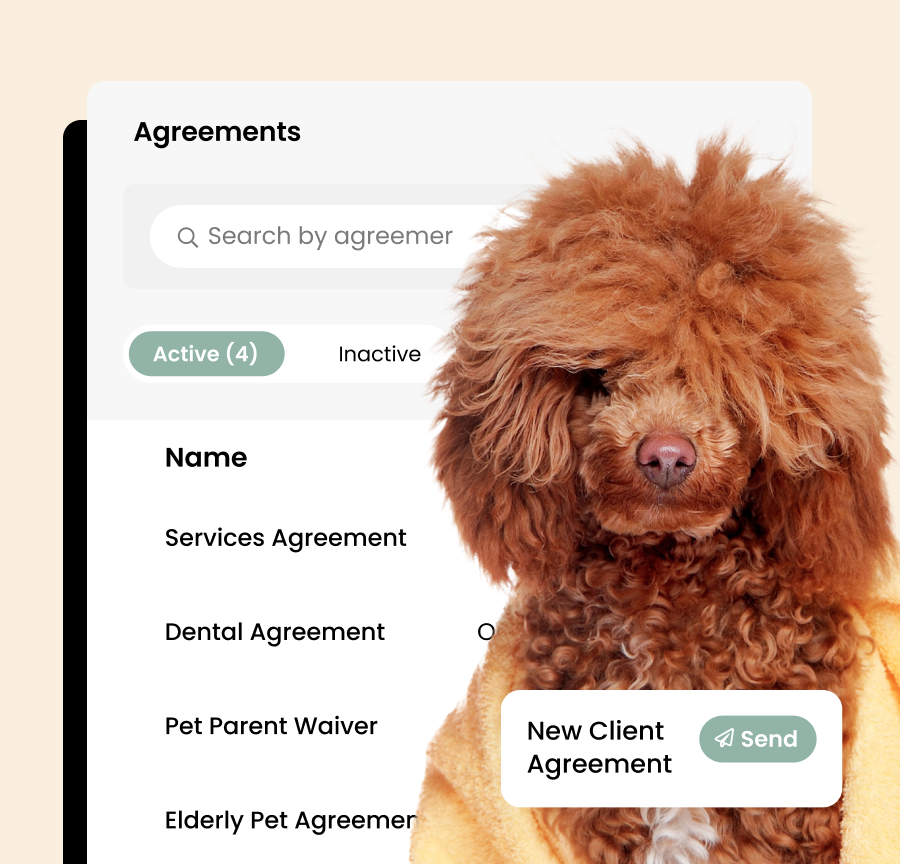
Even the best agreement can fall apart if your team has to remember when to send it. With Cuddles Agreements, the agreement becomes part of the workflow instead of just one more thing your team has to chase down.
The Agreements page describes the feature as a way to streamline customer agreements from creation through signing. You can set up agreements from existing documents by copying and pasting your current text, while keeping the structure you already use. Then you can decide how each agreement should be sent:
First visit: Useful for new-client policies, intake expectations, and grooming consent.
Every visit: Useful for recurring risk points, such as allergy acknowledgment.
Manual: Useful when the situation is specific, like a sensitive-skin dog, a special handling case, a behavior concern, or a one-off service agreement.
Not every client needs every document every time. But the right client should get the right agreement before the right appointment.
What changes when agreements become part of booking
The biggest win isn’t just less paperwork. It’s fewer loose ends.
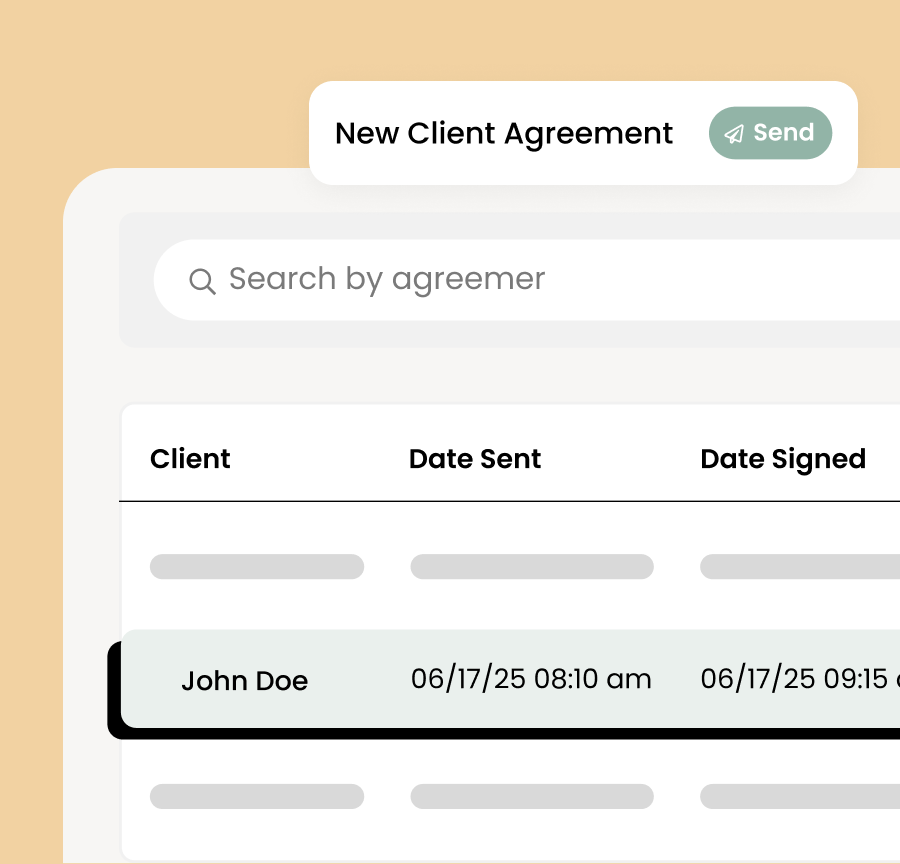
When agreements are built into the booking process, your team doesn’t have to keep asking, “Did we send that?” “Did they sign?” or “Where is the form?”
Signed and pending agreements are easier to track, which gives the front desk, groomers, and managers a shared source of truth.
Clear agreements also make team communication easier. If a client asks why a fee applies, your staff can point back to the agreement instead of improvising under pressure. If a pet parent says they were never told, the business has a record. If a policy changes, the next version can be sent in a consistent way.
Start with the agreement your team explains 10 times a week
You don’t need to fix every document today. Start with the one policy your team is most tired of explaining.
Maybe it’s the matting policy. Or an allergy and sensitivity agreement for pets with delicate skin.
Pick the policy that causes the most repeated confusion, then rewrite it so pet parents can understand 3 things right away:
- What are they agreeing to?
- Why does it matter?
- What happens if this policy applies?
How Cuddles helps you put agreements to work
Cuddles Agreements gives your pet business a practical way to create and manage agreements without turning the process into a side quest.
You can bring in language from documents you already use, set when each agreement should be sent, connect agreements to your booking flow, and track which clients have signed or still need a nudge.
The feature is designed to help businesses keep agreements organized and within reach, with options to access, resend, print, and sign important documents from one place. And if you don’t want to start from a blank page, the Guides & Templates section on the Cuddles website includes downloadable resources for pet businesses.
The hub features resources like a Pet Grooming Allergy Agreement template to document key health details and communicate risks, as well as our newly added Essential Services Agreement Template for Pet Groomers and Daycare, which helps outline foundational terms, policies, and liabilities for your daily operations.
Good agreements aren’t about scolding pet parents. They’re about giving everyone involved a clearer starting point before the appointment begins. The pet parent knows what to expect, your team knows what was agreed to, and the rules feel like a natural part of the care process.