You pick up your pet from a grooming appointment, and everything looks fine. The coat is clean. The nails are trimmed. The bow is cute if your groomer is a bow person.
But later that night, your dog or cat is extra clingy. Or strangely quiet. Or completely wired. And as a pet parent, you’re left with a nagging sense of anxiety, wondering how the appointment actually felt for your pet.
That question matters because more families than ever are making decisions about pet grooming. APPA reports that 94 million U.S. households own a pet. With so many pets in the picture, many owners are trying to find a groomer they can trust and wondering whether frequently switching groomers could do more harm than good.
Sticking with the same pet groomer can make grooming feel more predictable for your pet, more transparent for you, and more consistent over time. Not in every case. Not with every groomer. But when the fit is right, familiarity can make a real difference.
Why can the same pet groomer make grooming more predictable over time?
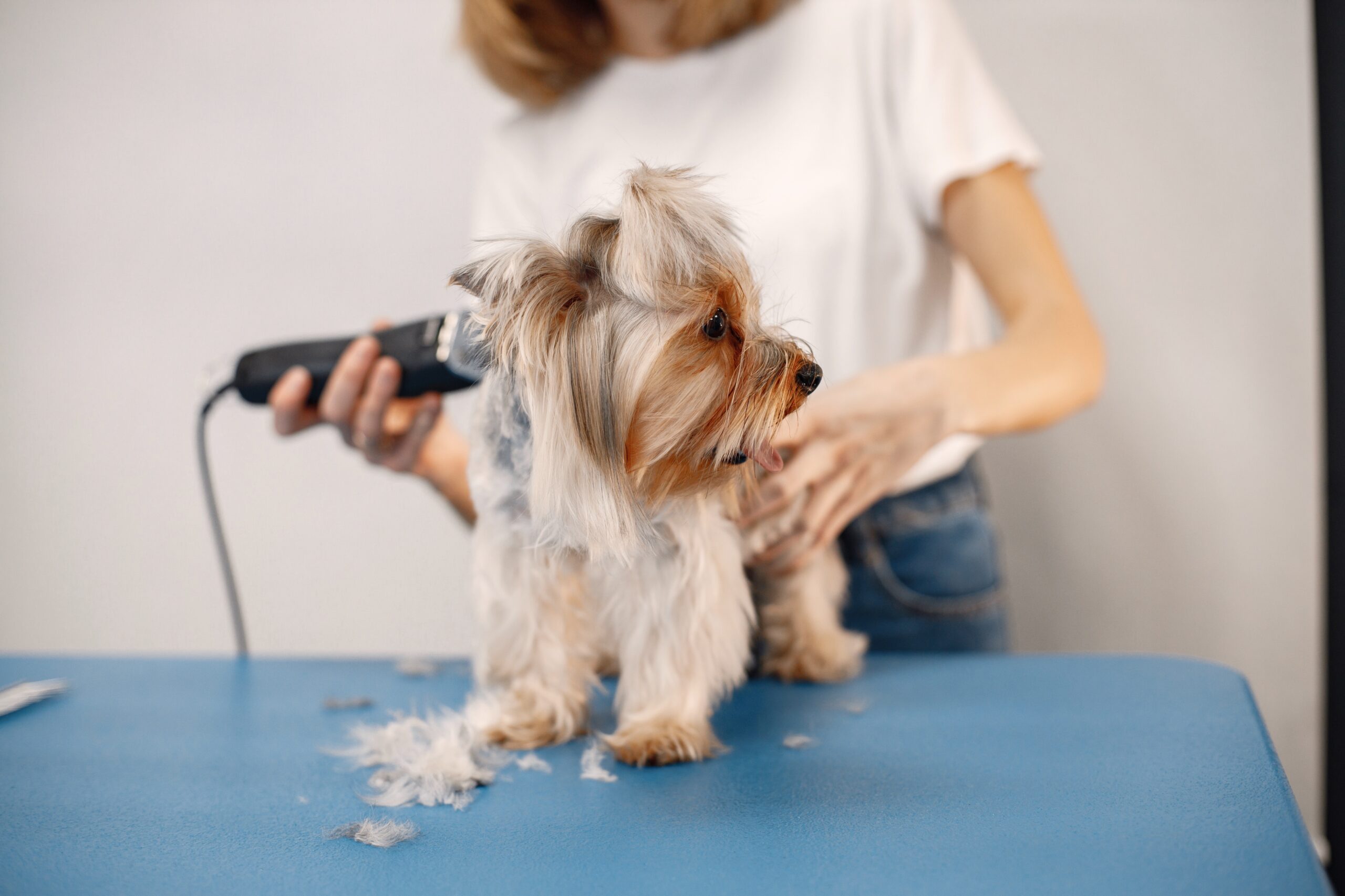
Pet grooming is not just a beauty appointment. It is a full sensory experience involving handling, touch, sound, restraint, temperature, tools, smells, and a new environment, all packed into a single visit.
A 2022 study examined 55 dog grooming services and found that changes in dogs’ behavior and physiological responses were most noticeable when they arrived at the pet shop and during the drying process. The study also found that employee characteristics influenced how the dogs behaved. That matters because it suggests the human side is part of the experience.
📊 What grooming studies found?
Changes in dog behavior and physiological responses were observed primarily when dogs arrived at the pet shop and during the drying process.
The same study also found that the dogs’ core stress levels remained stable. So this is not an argument that grooming is always harmful. Instead, it suggests that grooming can be a lot for some dogs, and that how the process is handled really matters.
Source: Revista Brasileira de Zootecnia
That is where consistency becomes especially important for your furry friend. A groomer who already knows your pets’ pace, pressure points, tolerance for the dryer, and subtle warning signs does not have to start from scratch every time.
Sticking With the Same Groomer Reduces Pet Anxiety
Another study showed that dogs respond better to physical contact from people they know. While the study was not specifically about grooming, the takeaway still holds: familiar handlers may help reduce a dog’s stress.
That said, this does not mean every dog or cat will instantly relax with a familiar groomer. Pets have different personalities and their own ways of reading their environment and the people in it, just like we do. It is not as simple as plugging in “same person” and getting “zero stress” back. But it does suggest to pet parents that repeated, predictable handling from someone your pet already knows may feel easier than facing a new person every time.
Think about what your pet cannot explain out loud. They cannot tell a new groomer, “I hate having my front paws held for too long,” or “The dryer is fine until it gets near my face,” or “Please do not start with my ears.” A familiar groomer learns those details over time through careful observation. That kind of accumulated knowledge can make grooming gentler, more efficient, and far less surprising for your pet.
And often, surprise is the real problem…
For pet parents, consistency is not just emotional
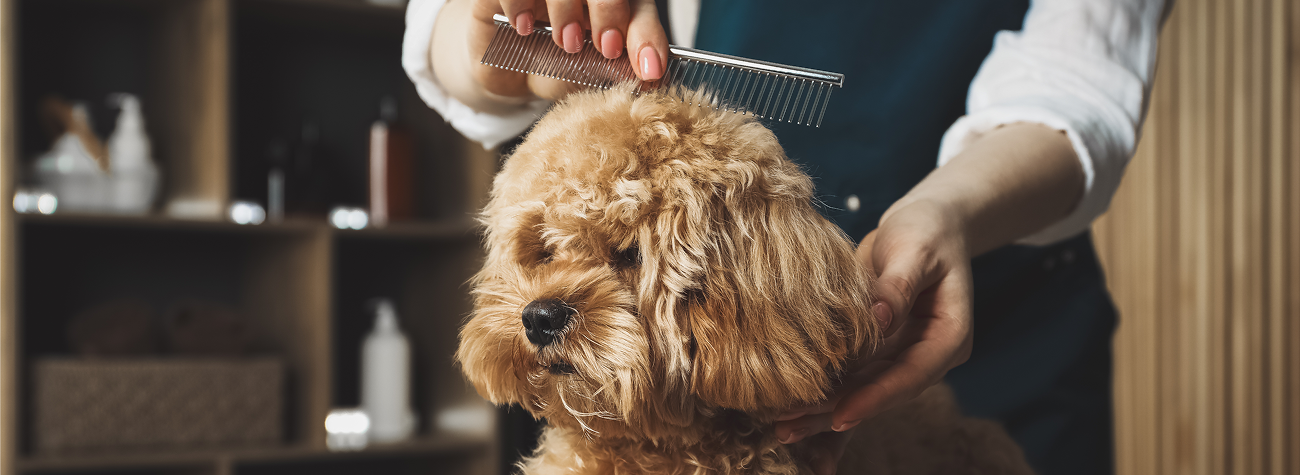
Sticking with the same groomer is practical. They are more likely to remember how short you like the trim, what your pet tolerated last time, whether matting showed up behind the ears, whether the nails seemed unusually sensitive, or whether your pet needed breaks during drying. That means less time spent re-explaining and a better chance of getting a predictable result.
For your pet, that relationship builds its own kind of memory over time. And there is a trust factor here, too. Not blind trust. Earned trust.
Every time you switch to a new groomer, the learning curve starts over. Your pet has to adjust. You have to explain your preferences again. The new groomer has to figure out coat condition, comfort level, and handling style from scratch. Sometimes that is necessary. Sometimes it is even the right call.
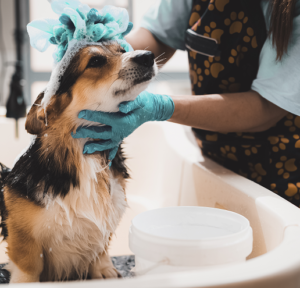
Why grooming consistency matters for pet parents?
Pet ownership is growing again, and concerns about access to pet services are very real. APPA reported that 22% of U.S. pet owners were worried about access to pet care services, with affordability and appointment availability among the main reasons.
So if you have a calm, skilled groomer who works well with your pet, that relationship is worth protecting. An appointment with someone who already knows your dog or cat is incredibly valuable.
How to tell if you have found the right pet groomer?
- A good groomer helps you understand what actually happened during the appointment.
- They ask questions that reflect real memory, not just standard intake.
- They share specific observations instead of vague reassurance: They tell you if your pet was anxious, wiggly, uncomfortable, or unusually tolerant.
- They do not treat that feedback as bad news. They treat it as useful information.
- Over time, you should also notice that your pet’s appointments feel more predictable. Not perfect every single visit, because pets have off days too. But predictable.
If your groomer remembers your pet as an individual, that matters. If they also remember your preferences and your pet’s comfort level, that matters even more.
When should you not stay with the same pet groomer?
Consistency only helps when the relationship is actually good.
- Do not stay with the same groomer just because switching feels awkward.
- Do not stay because your pet looks cute in photos.
- Definitely do not stay because you are afraid of seeming “difficult” for asking questions. Pet parents have every right to ask questions. Honestly, they should.
- If a groomer avoids explaining what happened, dismisses your concerns, changes the style from visit to visit without talking to you about it, or makes you feel like your pet’s stress is an inconvenience, that is not the kind of consistency you want.
“The goal is not loyalty for loyalty’s sake. The goal is consistent care”.
What to ask your pet groomer before your next grooming appointment?
The next time you book an appointment, ask a few simple questions:
- Has my pet become easier or harder to groom over time?
- Are there any parts of the process that seem especially stressful?
- Would you recommend keeping my pet on a regular schedule for their coat and comfort?
- Is there anything you would like me to work on at home before the next visit?
- Can I request the same groomer each time?
Those questions do two things at once. They show your groomer that you care about the experience, not just the end result. And they help you figure out whether this person sees your pet as an individual, not just another appointment on the calendar.
Closing takeaway
If your dog or cat has connected with a good groomer, sticking with that person can be one of the simplest ways to make grooming feel more consistent over time.
Familiarity does not magically fix everything, but it can reduce guesswork and uncertainty. It gives your pet a chance to recognize the person caring for them. It gives you, as a pet parent, a clearer sense of what is changing and what is not. And it turns each appointment into part of a longer story of care rather than a brand-new experiment every month.
So the next time your pet comes home from the groomer, do not just ask, “Do they look good?” Ask, “Does this feel like someone who is truly getting to know my pet?” That question will take you further.
Footnotes
[1] Mariany Ferreira et al., “Stress in dogs during grooming in a pet shop,” Revista Brasileira de Zootecnia, 2022.
[2] F. Kuhne et al., “Effects of human-dog familiarity on dogs’ behavioural responses to petting,” Applied Animal Behaviour Science, 2012. Older source, verify for current behavioral context.